
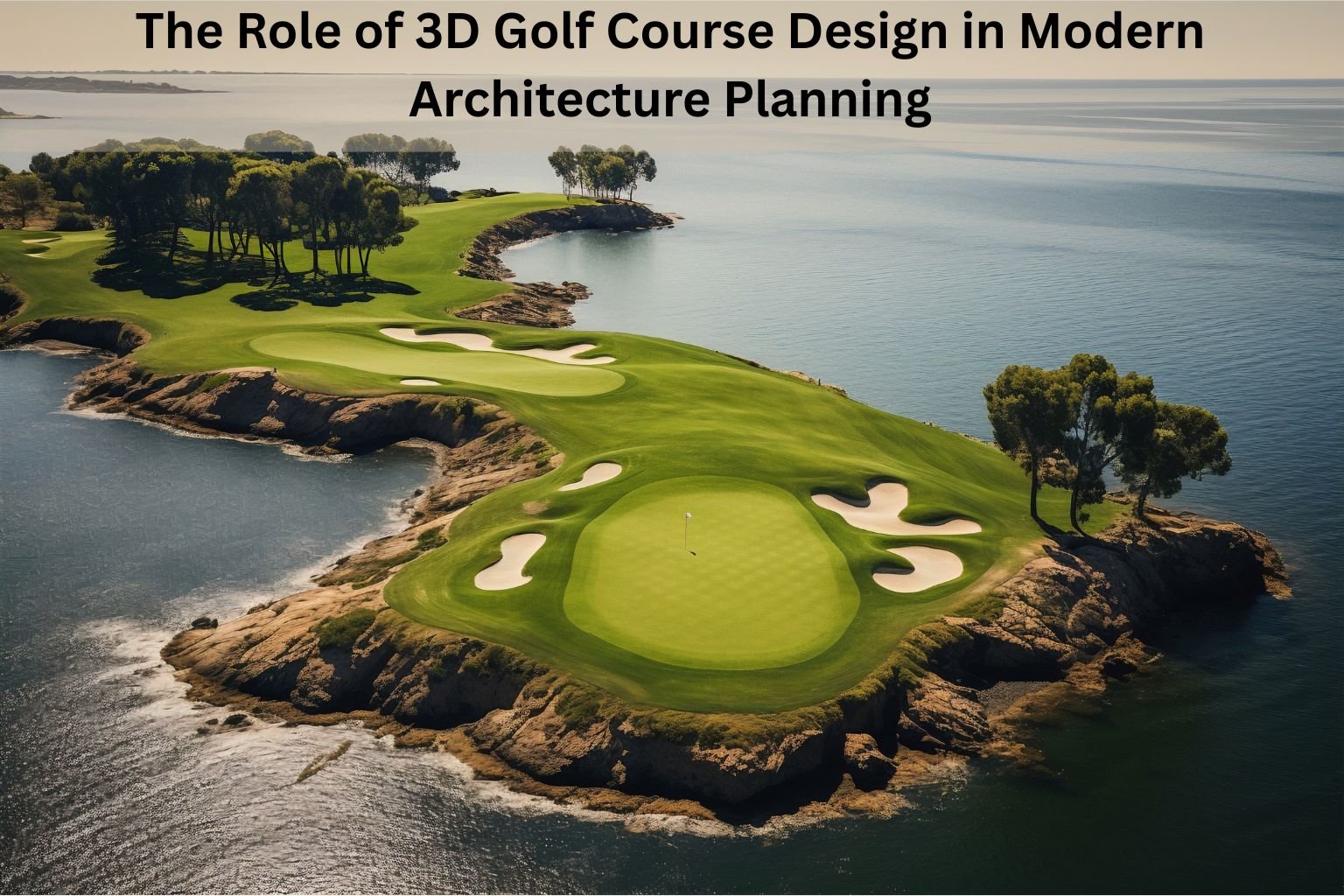
How 3D Golf Course Design Transforms Modern Course Architecture
The development of 3D golf course designs has changed the way that golf course architects and landscape designers look at golf course architecture. Architects/landscape architects can create a very accurate interactive model of a particular piece of land before any actual building takes place. Combining the data from the various pieces of land, including architectural 3D renderings, enables architects and landscape architects to have a better understanding of how to build a specific piece of land and how to use that land in a way that provides the highest potential for the most successful golf course development. As golf courses continue to develop into multi-dimensional architectural and landscaped ecosystems, 3D golf course design will enhance architects and landscape architects by providing better planning, decreasing errors made during construction, and improving visual communication.
Understanding 3D Golf Course Design and Its Core Purpose
A detailed representation of a golf course including all the architectural elements, the floor plan and the topography, is 3D Golf Course Design. 3D Golf Course Design teaches architects how to evaluate a golf course’s elevation, drainage, playability and design, while simultaneously meeting the aesthetic requirements of a golf course.
How does a 3D Golf Course Model differ from 2D Drawing
3D Golf Course Design provides a more three-dimensional, realistic portrayal of golf courses. By using a 3D Golf Course Model, stakeholders can walk through the golf course virtually, see how it will fit into the landscape and evaluate the different aspect of the golf course long before any physical construction takes place.
Importance of Golf Course Architectural Visualization in Planning
Architectural Visualization of Golf Courses will enable architects to visualize their design intent for their clients, potential investors, and other stakeholders to see and comprehend all aspects of the layout and design, including all landscaping elements (trees, shrubs, flowers, etc.) and all structural components (cart paths, tee boxes, etc.) of a proposed golf course.
By Using Visual Models to Improve How Design Ideas Are Communicated
Using visual models instead of abstract plans creates clearer communication through greater visual realism, which helps to avoid misinterpretations of design intent among customers and clients; provides an opportunity for quicker approval processes; and allows for the entire project team to have a common understanding of the result of the project (i.e., the completed golf course design).
Role of Architectural 3D Rendering for Golf Courses
3D graphic building and design (including virtual tours) of a golf course focuses on building realistic representations of the golf course, which includes producing/rendering 3D Images/Videos of its key elements, including (but not limited to) cart barn, clubhouse, fairway, and greens as well as the landscaping around the course.
Architectural buildings’ 3D renderings ensure that the buildings on the golf course (and their surrounding environment) are designed in a manner that works well with the topography of the ground where the buildings are being built. This allows designers to use various methods of modeling/creating bread to determine which method best matches the physical characteristics of the existing landscape, including piece-by-piece scaling and utilizing visual aids such as tech surveys and computer-aided design (CAD).
How 3D Golf Course Design Supports Sustainable Development
An important part of the sustainability movement in today’s golf course design is incorporating the use of three-dimensional (3D) technology. 3D golf course design allows golf course architects to evaluate such things as water usage, land grading, and vegetation placement to ensure that the effects on the environment are minimized while ensuring that the design is playable and visually appealing.
To better understand how environmental concerns will impact their golf course designs, golf course designers use 3D models to simulate several factors such as drainage patterns, erosion vulnerabilities, and sunlight exposure. The use of these models gives designers valuable information that supports environmentally responsible design decisions, decreases maintenance costs, and helps to promote the concept of long-term sustainable development.
Benefits of 3D Golf Course Design for Stakeholders
3D golf course design benefits architects, developers, and course managers alike. It enhances visualization, improves decision-making, and supports long-term operational planning.
- Clear visualization of golf course layouts and architectural elements
- Faster approvals and reduced design revisions
- Improved collaboration between architects, engineers, and clients
Comparing Traditional Design vs 3D Golf Course Design
Modern golf course projects increasingly favor 3D design over traditional methods due to its precision and visual clarity.
Traditional vs 3D Golf Course Design
| Aspect | Traditional 2D Design | 3D Golf Course Design |
| Visualization | Limited, flat drawings | Realistic, immersive views |
| Accuracy | Higher risk of errors | High precision and detail |
| Stakeholder Communication | Difficult to interpret | Easy to understand |
| Design Revisions | Time-consuming | Faster and cost-effective |
Future of 3D Golf Course Design in Architecture
As technology evolves, 3D golf course design will integrate AI, real-time simulations, and digital twins. These advancements will further enhance accuracy, sustainability, and lifecycle management of golf course projects.
Digital Twins and Smart Course Management
Digital twins will allow ongoing monitoring of golf courses post-construction. Architects and managers can analyze performance data, plan upgrades, and optimize maintenance using the original 3D model.
Frequently Asked Questions

Founder & CEO
Bigyan Kar is the driving force behind Geoshot Technologies and has been since its founding, leading the company’s vision in delivering advanced CAD, GIS, graphics, map illustrations, and 3D solutions across multiple industries. While Geoshot serves a wide range of sectors, Bigyan has maintained a strong specialization in golf course graphics, CAD drafting, and mapping—ensuring highly accurate and visually compelling representations for golf architects and planners.