
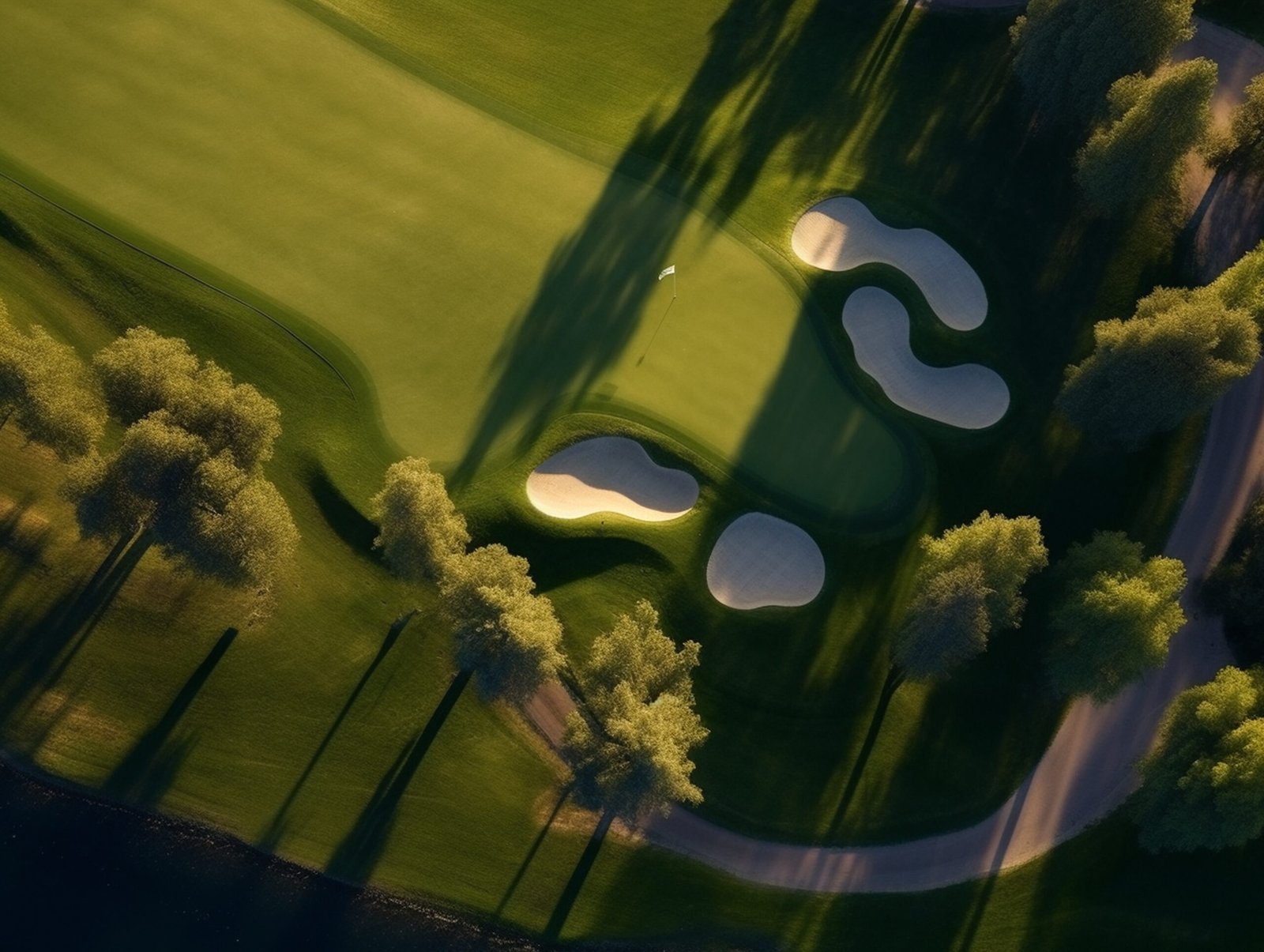
How 3D Golf Course Image Technology Improves Course Planning
A 3D representation of the golf course provides a more accurate and interactive way for the design team, planners and developers to investigate the layout prior to construction. In addition to the previous traditional drawings, teams can analyse the terrain, hazards, elevation levels and playing flow in the desired level of detail. By using golf course renderings and comprehensive 3D golf graphic models, this innovative method decreases design risk and increases design decision-making. The application of the above methods during the planning, approval, marketing, and future maintenance phases of 3D golf course development greatly increases the applicant’s chances of success.
Better Visualization with 3D Golf Graphic and Layout Models
An accurate 3D representation of a golf course assists stakeholders in understanding the various features of the course including fairways, greens, bunkers, and any elevation changes. 3D images create a more comprehensive representation of the various characteristics of the course and therefore, enhance communication between architects, investors and construction teams. 3D images of the course facilitate faster reviews, greater clarity and fewer misunderstandings during the development process.
The features of using 3D graphics include:
- Realistic terrain and elevation views;
- Clear depiction of hole sequencing and how they are routed
- An easy means for non-technical stakeholders to have a clear understanding when it comes to the course layout.
By utilizing a 3D golf course graphic, every decision maker can visualize the completed golf course and therefore, enhance alignment between the design intent of the course and the way the course will actually be constructed. Additionally, use of 3D graphics allows for the early identification of layout conflicts, thus enabling greater ease in collaborative planning with all departments and partners involved in developing the golf course.
Improved Terrain Understanding Through 3D Golf Course Image Data
3D golf course design uses survey and LiDAR data to provide users with detailed terrain models representing slope and contour accurately. By having the ability to analyze drainage flow, transitions in elevation, and play areas before construction starts allows designers to minimize grading issues and maximize course playability under different environmental conditions.
Accurate terrain modeling creates shot value design accuracy and playability zone safety. It also aids in wiser Earthwork planning. The availability of reliable elevation data creates a 3D golf course image, that allows the design team to create a hole that is interesting and environmentally sensitive.
Improving Accuracy and Reducing Errors with a 3D Golf Course Image
Using a 3D golf course image helps improve the overall accuracy of the placement of all elements of the green, bunkers, fairways, and distance measurement. Measurement, site-determined distances from green to hole, size of the green, depth of the bunker, and width of the fairway all can be validated electronically. This will result in fewer or no corrections on-site and will prevent costly redesigns in the construction phase of the project.
| Design Aspect | Traditional Plans | 3D Golf Course Image |
| Elevation Check | Limited | Highly accurate |
| Distance Testing | Manual | Automated |
| Error Detection | Late stage | Early stage |
3D golf course models allow golf course designers to identify dimensions and relationships for an area before construction begins. This practice helps assure that there will be a lesser chance of needing to make changes and that there are no unexpected costs associated with making necessary changes. 3D golf course models give designers a better understanding of local regulations and their projects’ ability to comply with them, as well as providing better coordination with engineers from entrance to exit in the design process.
Using 3D golf graphic model systems during the design stage gives designers the opportunity to identify conflicts among pathways, waterways, paths for golf carts, and other structures such as golf buildings and storage facilities early on in the design process. Identifying these conflicts helps prevent major design changes at the end of the design process and helps develop efficient timelines for building projects from concept through the end of construction.
3D golf graphic model systems for design assist in identifying conflicts between budget and schedule because the processes require designers to identify problems virtually before reaching the construction phase. Ultimately, this results in a more accurate set of building documentation for contractors to build from, as well as a more effective project management process among architects, project managers, and contractors.
Long-Term Management Benefits of 3D Golf Course Design
Beyond planning, the benefits of 3D golf course design continue after construction. Course managers use models for maintenance planning, renovation, and strategy analysis. Digital twins support upgrades, hazard adjustments, and playability improvements over time.
| Use Case | Value from 3D Golf Course Design |
| Renovation Planning | Accurate modification previews |
| Maintenance Strategy | Targeted turf management |
| Feature Upgrades | Risk-free testing |
Creating a golf course in 3D enables owners to use this model for future reference over and above their original intent. They can see what a specific modification would look like before doing it. As a result, owners can improve their ability to make smart renovations while controlling costs; they also continuously improve their facilities using actual performance data of the golf course.
Using updated 3D images of the existing golf course, designers can now test modifications to bunkers, tees, and greens without physical changes to evaluate playing impact and costs before making or implementing the actual changes.
By using this virtual testing process to evaluate multiple renovation options, decision-makers have reduced the amount of guesswork used to compare the various options for renovation; thus providing better investment choices with less impact on the operation of the golf course.
Frequently Asked Questions

Founder & CEO
Bigyan Kar is the driving force behind Geoshot Technologies and has been since its founding, leading the company’s vision in delivering advanced CAD, GIS, graphics, map illustrations, and 3D solutions across multiple industries. While Geoshot serves a wide range of sectors, Bigyan has maintained a strong specialization in golf course graphics, CAD drafting, and mapping—ensuring highly accurate and visually compelling representations for golf architects and planners.