

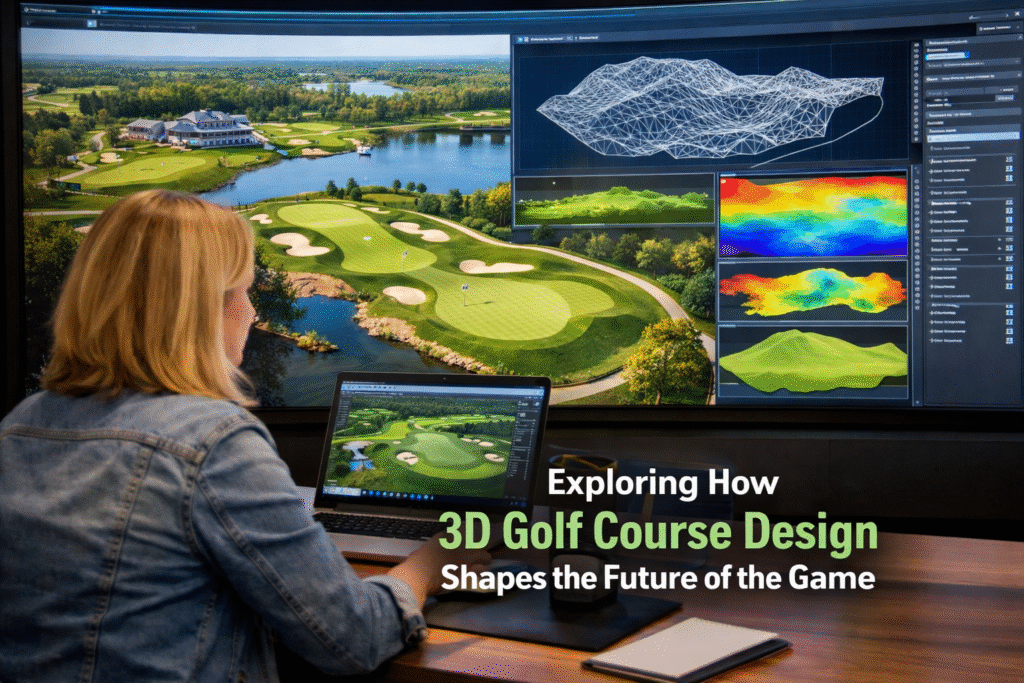
The evolving nature of 3D golf course design is changing the relationships architects, players and managers have with golf. Through advanced technologies like 3D modeling, visualization and mapping, golf courses are now being designed and experienced more accurately and creatively than ever before. From modeling terrain accurately to simulating player experiences, 3D technologies have enhanced performance and enjoyment. This evolution has fused creativity with data, providing more intelligent course design, safer maintenance practices and more element play experiences for all golfers around the world.
The Importance of Golf Course 3D Modeling in Contemporary Design and Experience
- Accurate Terrain Visualization: 3D Modeling provides layered topographic data to create a course design that very closely resembles reality and integrates with the surrounding land.
- Timely Design Updates: Architects can update the design on the fly and visualize in real-time in 3D space.
- Collaborative Planning: Designers, investors, and construction teams can collaboratively view the model interactively, in order to confirm precision before any construction starts.
Golf course 3D modeling offers designers the ability to bring conceptual design to life accurately and with realism. By providing targeted topographic data and mapping of terrain, the designer can produce a layout that fits into the environment of the natural terrain, ultimately lowering the costly revisions, and improving createability of the overall design.
3D Visualization in Golf: Bringing Designs to Life
- Photorealistic Course Views: 3D visualization allows clients and golfers to explore courses before construction begins.
- Virtual Flythroughs: Designers can simulate camera paths or player perspectives for better spatial understanding.
- Lighting and Shadow Studies: Visualization tools help assess how sunlight interacts with the landscape throughout the day.
3D visualization in golf brings new levels of clarity and engagement. From photorealistic renderings to dynamic flythroughs, stakeholders can visualize the project’s potential and make informed design choices. This technology ensures that every hole, slope, and hazard aligns with the desired play strategy.
3D Mapping for Golf: Precision in Planning and Maintenance
- LIDAR and Drone Integration: High-accuracy mapping captures course topography for precise grading and irrigation planning.
- Data-Driven Layouts: 3D maps optimize tee and green placements based on slope and drainage.
- Maintenance Forecasting: Real-time 3D mapping aids in identifying wear patterns and managing turf health.
3D mapping for golf courses enables detailed digital twins that streamline construction and ongoing maintenance. By merging LIDAR and drone data, designers gain exact surface measurements, helping them build sustainable and efficient layouts while minimizing environmental impact.
Golf Simulation Technology: Redefining Training and Performance
- Realistic Virtual Play: 3D simulations let golfers experience real-world courses virtually.
- Performance Analytics: Sensors and 3D tracking capture swing data and ball trajectories.
- Custom Course Creation: Players can design or modify courses digitally to practice diverse conditions.
Golf simulation technology powered by 3D modeling allows athletes to train anytime, anywhere. These systems combine accurate environmental physics and virtual visuals to help players analyze performance, adapt strategies, and enjoy immersive gameplay experiences that mirror real-world challenges.
Sustainability and Efficiency Through 3D Technology in Golf
- Water Conservation: 3D tools simulate irrigation efficiency to minimize waste.
- Eco-Friendly Grading: Designers can evaluate terrain reshaping impacts before altering landscapes.
- Material Optimization: Digital models calculate material volumes, reducing construction costs and waste.
Sustainability is a key benefit of integrating 3D technology in golf course planning. From precise irrigation modeling to eco-conscious grading, these tools help balance performance with environmental responsibility, ensuring modern golf courses thrive without harming their natural surroundings.
Enhanced Player Experience with 3D Course Previews
Golfers can virtually preview courses before stepping on the field. 3D previews display hole distances, hazards, and terrain details, allowing players to plan strategies and improve confidence—making every round more informed and enjoyable.
Architectural Creativity with Digital Design Tools
3D software empowers architects to experiment with design elements like elevation, bunker placement, and green contours. It fosters creativity without risking budget overruns, as every modification is digitally tested before construction begins.
Remote Collaboration and Client Engagement
3D models enable global collaboration among architects, engineers, and investors. Interactive presentations make it easy for clients to explore proposed designs remotely, encouraging feedback and faster decision-making while maintaining visual clarity.
Cost Reduction Through Virtual Prototyping
3D modeling minimizes trial-and-error expenses by testing layouts virtually. Designers can detect flaws early, assess slope feasibility, and forecast costs accurately, saving both time and resources during construction and maintenance phases.
Frequently Asked Questions

Founder & CEO
Bigyan Kar is the driving force behind Geoshot Technologies and has been since its founding, leading the company’s vision in delivering advanced CAD, GIS, graphics, map illustrations, and 3D solutions across multiple industries. While Geoshot serves a wide range of sectors, Bigyan has maintained a strong specialization in golf course graphics, CAD drafting, and mapping—ensuring highly accurate and visually compelling representations for golf architects and planners.